
Most guests arrive at an event, reach for a beautifully presented canapé, and think nothing of it. The prawn skewer is perfectly chilled. The mini beef slider is warm and intact. The tray arrives just as the last one empties. It all looks effortless, and that, right there, is the point.
What guests don’t see is the quiet machinery that made it happen. Behind every polished event catering service is a team that started its day long before the first guest arrived, and won’t stop until the last tray is loaded back into the van. If you’re considering finger food catering for your next corporate event, wedding, or private function, this is worth knowing. Understanding what your catering team actually does on the day helps you appreciate the value you’re paying for, and helps you choose the right people to trust with your event.
Here’s what a real event day looks like from the inside.
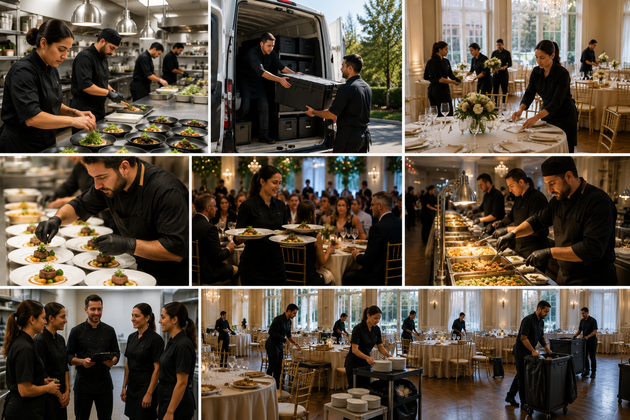
5:30 AM, The Kitchen Wakes Up
While your alarm hasn’t gone off yet, the kitchen is already alive. The head chef and prep team arrive before sunrise. Cold items, dips, chilled seafood, assembled canapés that travel well, get their final touches. Hot components are prepped and staged in the order they’ll be needed, not alphabetically, not randomly, but based on the service schedule agreed weeks earlier.
Mise en place, the chef’s term for having everything in its place, isn’t a nice idea at this point. It’s a survival strategy. If the smoked salmon blinis aren’t rolled and wrapped before the van is loaded, they won’t be done at the venue. There’s no improvising at 150 covers.
7:00 AM, The Brief and the Checklist
Before anyone touches a tray, the team gathers. The event manager runs through the day: venue layout, number of guests, any dietary requirements flagged by the client, the service timeline, and the order of food drops. This meeting takes fifteen minutes, but it’s the thread that holds the day together.
Dietary accommodation has become a serious part of event planning. Research from the catering industry shows that approximately 45% of catering services have seen a rise in demand for dietary-specific menus, gluten-free, allergen-sensitive, and other requirements. A professional team doesn’t treat these as afterthoughts. Each dietary item is separately labelled, separately handled, and tracked through service so no guest goes without.
8:30 AM, Loading Up
The van isn’t just filled; it’s packed with intention. Hot boxes go in last so they stay nearest the door. Fragile items are cushioned. The order of unloading mirrors the order of setup, so the team isn’t rummaging through equipment when they arrive. Experienced caterers know that a chaotic unload costs time you won’t get back.
For events further afield, this stage is even more critical. The food doesn’t just need to travel; it needs to arrive in serving condition. That means the right temperatures, the right containers, and someone who has done this enough times to anticipate the small things that go wrong.
10:00 AM, On-Site Setup
At the venue, the team moves quickly and quietly. Tables are positioned, linens are laid, and serving equipment is assembled. Tiered stands, platters, chafing dishes, garnish trays- each has a designated spot based on the floor plan.
The visual presentation of food matters more than most people realise. Research consistently shows that the presentation of dishes, the setup of food stations, and the overall look of the spread all contribute to a guest’s sense of quality and care. A tray of beautifully arranged arancini with a scatter of fresh herb garnish isn’t just aesthetically pleasing; it signals to every guest that they’re in good hands.
The team also walks the space. Where are the bottlenecks? Where will guests naturally cluster? How far is the kitchen prep area from the main service zone? These questions shape how and when food moves throughout the event.
12:30 PM, Service Begins
Guests start arriving, and this is when all the prep pays off, or doesn’t. A well-run finger food service creates something specific: freedom of movement. Guests can circulate, talk, and engage without being tethered to a table. Food format genuinely shapes the atmosphere of an event; finger food and roaming service actively encourage networking and conversation in a way that a seated dinner simply can’t.
Staff circulate with trays, reading the room. A good server doesn’t interrupt a conversation; they time their approach. They know which items are moving and which need a push. They keep an eye on the dietary items to ensure those guests are specifically catered for, rather than left to forage.
Meanwhile, back in the prep zone, the kitchen team is running to a schedule. Hot items are timed to come out in waves so nothing sits too long. Replenishment is constant but not frantic.
2:00 PM, Mid-Service Check
Halfway through service, the event manager does a quiet lap. Are guests engaged with the food? Are any trays sitting too long? Is the timing holding? Good catering teams don’t just execute a plan; they read the event as it unfolds and adjust.
The primary reasons clients choose catering services are quality of food (78%), reliability (65%), and menu variety (60%). Reliability, that second number, doesn’t mean simply showing up. It means that when a tray of duck spring rolls was promised at 2:15, it appears at 2:15. It means the client doesn’t need to worry about any of this, because the team already is.
4:00 PM, Wind-Down Service
As the event draws to a close, service shifts. Lighter, sweeter items, petite desserts, chocolate bites, macarons, replace savoury options. It’s a deliberate rhythm that mirrors how a meal naturally ends, even when there are no formal courses.
The team begins a rolling pack-down: clearing empty platters, consolidating food, starting to break down equipment at the periphery of the room without disrupting guests still present. This takes experience. A heavy-handed pack-down makes guests feel like they’re being ushered out. A good one is invisible.
6:00 PM, Post-Event
When the last guest leaves, the real clean-up begins. Everything is inventoried, packed, and loaded. Leftover food is handled according to pre-agreed procedures; many teams now work with food rescue partners to ensure nothing goes to waste. The venue is left exactly as it was found.
Back at the kitchen, equipment is cleaned and stored, any post-event notes are made, and, often over a quiet coffee, the team runs through what worked and what could be better. That debrief, small as it sounds, is how a good team becomes a great one.
What This Means for You as a Client
You don’t need to manage any of this. That’s the whole point. When you work with a professional gourmet catering team, you’re not just buying food; you’re buying a day’s worth of expertise, planning, and problem-solving that you’ll never see. The seamless experience your guests enjoy is the product of work that started well before they arrived and continues long after they’ve left.
The questions worth asking when choosing a caterer aren’t just about the menu. Ask how they handle dietary requirements. Ask what their service timeline looks like. Ask what happens if something goes wrong. The answers will tell you whether you’re hiring a food supplier or a team that genuinely understands what makes an event work.
Your guests will remember how the food made them feel, the warmth of a well-timed hot bite, the elegance of a well-presented platter, the sense that someone thought carefully about every detail. That feeling is worth choosing wisely for.
Delivery Sydney-Wide
We deliver delicious and affordable gourmet finger foods to areas right across Sydney, including: