
There’s a reason a warm bowl of soup tastes better in January than in July, and why a platter of chilled ceviche bites feels exactly right at a summer garden party. Food is deeply tied to the seasons, to what’s growing, what the weather is doing, and how people feel in their bodies at different times of year. When you’re planning an event and thinking about what to feed your guests, season is one of the most important things to get right.
Finger food catering offers an especially versatile canvas for seasonal menus. Small bites, passed platters, and grazing stations can shift with the time of year in ways that a traditional sit-down meal sometimes can’t. Here’s how to think about matching your finger food menu to each season, and why it matters more than you might think.
Why Seasonality Is Worth Taking Seriously
Before diving into specific menus, it’s worth pausing on why this matters beyond aesthetics. Seasonal ingredients are fresher, and fresher ingredients taste better, full stop. Research backs this up: a survey of diners found that 70% express a preference for catering that emphasises locally sourced ingredients, and 72% said they would be more likely to return to a provider that prioritises fresh ingredients and sustainable practices. Guests notice freshness. They may not always articulate it, but a tomato bruschetta made with in-season tomatoes versus a pale, out-of-season version tells the story for itself.
There’s also a practical angle. When caterers work with what’s abundant and in season, sourcing is easier, and costs are often lower, savings that can be passed on to clients or redirected toward quality elsewhere on the menu.
Spring: Fresh Starts and Light Flavours
Spring events- think garden parties, wedding receptions, milestone celebrations, and corporate lunches in the warmer months- call for food that feels as fresh as the season itself. After winter, guests are ready for colour, lightness, and brightness on the plate.
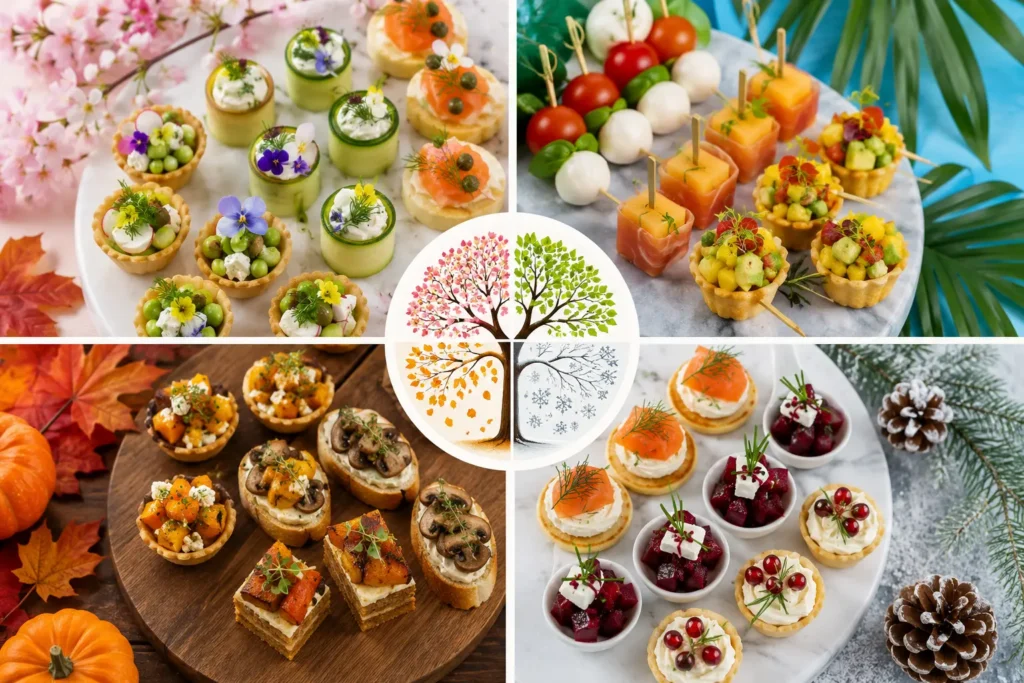
Finger food ideas that work particularly well in spring include:
Vegetable-forward bites. Think pea and mint crostini, asparagus wrapped in prosciutto, baby radish with herb butter, or stuffed courgette flowers. Spring produces some of the most flavourful vegetables of the year, and they look beautiful on a platter.
Light proteins. Smoked salmon blinis, chicken skewers with a lemon and herb dip, or delicate prawn cocktail cups are crowd-pleasers that feel appropriate for the warmer air without being heavy.
Dips and grazing elements. A spring grazing station might feature whipped ricotta with honey, a vibrant green hummus, fresh crudités in peak condition, and seeded crackers. These encourage guests to graze and mingle, exactly the kind of relaxed energy that spring events tend to have.
Avoid anything too rich or heavy in spring. Stews in bread bowls and deep-fried everything belong to other seasons.
Summer: Bold, Bright, and Made for the Outdoors
Summer is peak catering season. One industry report notes that summer accounts for approximately 45% of annual catering revenue, which reflects just how many events- outdoor weddings, corporate picnics, birthday parties, community festivals- happen between June and August.
For summer finger food, the guiding principles are bold flavour, ease of eating outdoors, and foods that hold up reasonably well in the heat.
Grilled and barbecue items top the charts in summer. According to FLIP’s catering statistics, 50% of catering business owners say barbecue and grilled foods are the single most requested menu item. Mini beef sliders, grilled halloumi skewers, chicken satay with peanut dipping sauce, and corn ribs with chilli butter are all reliable summer hits.
Cold bites and chilled items earn their place in the heat. Think cucumber cups filled with spiced crab, gazpacho shooters, and melon with cured ham on a skewer, or caprese skewers with burrata.
Fresh fruit and light dessert bites make excellent summer additions: watermelon and feta skewers, mini pavlovas with berries, or bite-sized lemon tarts.
One practical note for summer: work with your caterer on how items will be kept at the right temperature if you’re hosting outdoors. Great food that’s wilted or lukewarm in the heat loses its appeal quickly.
Autumn: Warmth, Depth, and Earthy Flavours
Autumn brings shorter days, a chill in the air, and a natural pull toward food that’s warming and more substantial. This season is fantastic for finger food menus because the produce is genuinely incredible: squash, mushrooms, root vegetables, apples, pears, and game meats are all at their best.
Autumn events (harvest festivals, bonfire nights, mid-year corporate gatherings, and early holiday parties) benefit enormously from a menu that leans into the season’s palette.
Warming bites are the stars of autumn. Mini pumpkin soup shots with toasted seeds, wild mushroom and thyme tartlets, or butternut squash and goat’s cheese crostini all hit the right note.
Richer proteins feel right in the cooler air. Pulled duck on pancakes with hoisin, game sausage rolls, or sticky glazed pork belly bites are the kind of things guests reach for twice.
Autumnal flavour pairings like apple and black pudding, pear and gorgonzola, or beetroot and smoked mackerel give menus a sophisticated, seasonal feel that guests genuinely appreciate. These aren’t things you’d crave in June, but on a cool October evening they taste like exactly what you needed.
Winter: Indulgence, Warmth, and Festive Cheer
Winter catering carries its own particular energy. Christmas parties, end-of-year celebrations, New Year’s events, and festive gatherings are among the most catered occasions of the year, and guests arrive expecting warmth and indulgence. Data from Q4 catering trends confirms this: bakery, dessert, and comfort food items accounted for around 32% of all catering transactions in Q4 2023, with cold weather driving a notable spike in demand for warming dishes like soups, curries, and ramen.
For finger food, winter is the season to lean into richness, festive touches, and anything that can be served warm.
Comforting, warming bites do very well. Mini beef wellington puffs, chorizo and manchego skewers, truffle mac and cheese bites, or brie and cranberry parcels are the kind of winter finger food that gets talked about after the event.
Festive flavours earn their place in December specifically: smoked salmon and cream cheese blinis, spiced lamb kofta with mint yoghurt, gingerbread with Stilton, or mini Yorkshire puddings with rare beef and horseradish.
Dessert bites are expected at winter events. Research shows 41% of respondents specifically consider ordering catering for Christmas, suggesting guests have high expectations for festive celebrations. Chocolate truffles, mini mince pies, salted caramel profiteroles, and candied walnut tarts all land well.
The Bottom Line for Your Event
A finger food menu isn’t just about filling plates; it’s a reflection of care, attention, and the thought you’ve put into your guests’ experience. When the food on the table matches the season, it feels intentional and considered. When it doesn’t, something feels slightly off, even if guests can’t name exactly why.
Whether you’re planning a summer corporate event, an autumn wedding, or a winter celebration, the season is one of the best guides you have. Work with a caterer who takes seasonality seriously, who knows what’s fresh and available at the time of your event, and who can build a finger food menu that makes your guests feel the time and place they’re in.
Because the best events aren’t just well-organised, they’re felt.
Delivery Sydney-Wide
We deliver delicious and affordable gourmet finger foods to areas right across Sydney, including: