
There’s a moment at every good event: you reach for a canapé, take a bite, and something just works. The crunch gives way to something soft. The saltiness is cut through by a whisper of acid. You’re not quite sure why it’s so good, but you want another immediately.
That moment is not an accident. It’s the result of deliberate decisions made well before the food ever arrives at your event. And understanding the science behind it can help you make smarter choices the next time you’re planning a gathering, whether it’s a corporate launch, a wedding, or a milestone birthday.
What Your Brain Is Actually Doing When You Eat
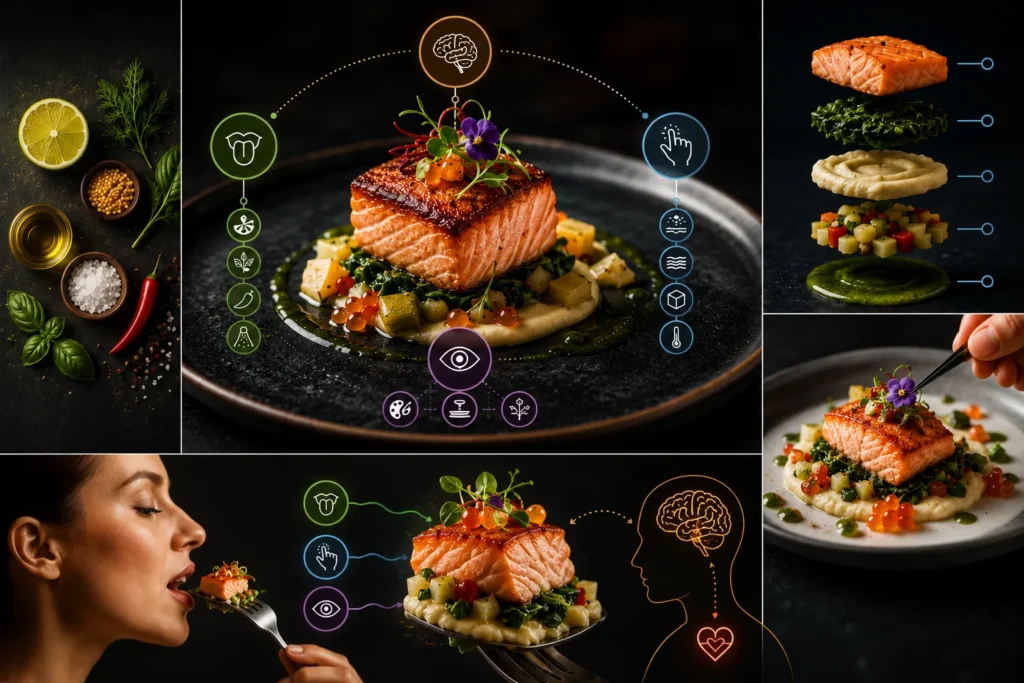
When you take a bite of food, your brain is processing an enormous amount of information at once. Flavour alone is not just taste; it is the combined result of taste (from your tongue), smell, temperature, and what you hear and feel as you chew. Research published in ScienceDirect confirms that food flavour is not merely defined by taste and smell, but is shaped by the synergistic interactions of texture, temperature, and visual appearance. In other words, the experience of eating something delicious is a full-body event, not just a transaction between your tongue and your taste buds.
This matters enormously in the context of finger food and catering. When guests are standing at an event, eating small bites, often in a single mouthful, there is no second chance to redeem a poor first impression. Every element has to do its job simultaneously, and do it well.
The Role of Texture (and Why It Goes So Much Deeper Than “Crunchy vs. Soft”)
Ask most people what they notice about food, and they’ll say flavour first. But food scientists have long understood that texture is equally powerful, and that the two are inseparable. Research published in the Cari Journals found that the interaction between texture and flavour contributes directly to the complexity of the eating experience, with certain textures either enhancing or masking specific flavour components.
What does that mean in practice? It means a perfectly seasoned filling can taste flat if it’s surrounded by a soggy pastry case. It means a bright, acidic dressing can feel harsh in the mouth if it coats an ingredient that’s too soft. And it means a crispy base can make the same flavour profile feel lively and satisfying.
The best finger food is designed with what chefs sometimes call textural contrast, pairing elements that behave differently in the mouth. Think of blini topped with crème fraiche and smoked salmon. The softness of the blini, the slight tang and creaminess of the dairy, the silkiness of the fish. Each element is a different texture, and together they create something more interesting than any single component on its own.
There’s also an emotional dimension to texture that is easy to underestimate. The same research notes that certain textures may evoke nostalgic memories or feelings of comfort, leading people to prefer familiar textures. This is why the best catering menus balance adventurous flavours with textures that feel reassuring, particularly in corporate or mixed-audience settings where you’re feeding a wide range of guests.
Balancing Flavour: More Than Just Salt, Sweet, and Spice
Good flavour balance in finger food follows principles that professional kitchens have refined over generations. At the heart of it is the idea that no single taste should dominate.
The five basic tastes- sweet, sour, bitter, salty, and umami- each play a role in how satisfied we feel after eating. A mouthful that is only salty might taste good at first but becomes one-dimensional quickly. One that brings in a layer of umami (that savoury depth found in things like parmesan, mushrooms, or a well-made reduction) tends to feel more complete and lingers more pleasantly.
For finger food specifically, there’s an added challenge: the portion is small. There’s no room for the flavour to develop over multiple bites; it has to hit quickly and leave a good impression. This is why the most skilled caterers think in terms of flavour layering: a base note (often something rich or savoury), a mid note (a fresh or aromatic element), and a finishing note (often acid, heat, or a gentle sweetness) that lingers just long enough to make you want the next one.
What good catering also does is account for the spread across a menu. If every bite at an event is rich and heavy, palate fatigue sets in quickly, and guests stop reaching for food. A well-designed finger food menu moves between heavy and light, warm and cool, bold and subtle. That rhythm keeps guests engaged, and it’s part of the reason why a thoughtfully curated catering spread is remembered long after the event is over.
Presentation: The First Bite Is Always With the Eyes
Before anyone picks up a piece of food, they’ve already made a judgement about it. This is not superficial; it’s neurological. Research has repeatedly shown that an appealing visual presentation of food makes people perceive it as tastier, even before they have tasted it.
For events, this has a direct practical consequence. Studies have also shown that using plates and glasses that contrasted with the food increased food consumption by 25%. The way food is presented- the colours, the height, the spacing, the garnishes- influences how much guests eat and how much they enjoy it. Presentation is not decoration for its own sake. It is part of the meal.
At an event, the platter or serving surface is an extension of the food itself. A canapé that is beautifully composed, with clean lines, considered colour contrast, and a small garnish that signals what’s inside, communicates quality before the first bite. It builds anticipation. And anticipation, as any chef will tell you, makes food taste better.
Good presentation in a catering context also has to be practical. Food that looks stunning on a plate but collapses the moment a guest picks it up fails its function. The best finger food is designed to hold its shape, maintain its visual integrity as it’s passed around a room, and still look intentional when someone takes it from a tray after it’s been circulating for fifteen minutes.
Why This Matters When You’re Planning an Event
A significant body of research on event catering has found that the quality of food and ingredients, the presentation of food, and the fit between event design and atmosphere are crucial factors in creating a memorable experience for guests. The same research found that unexpected elements- a flavour you didn’t expect, a textural surprise- are what elevate an event from pleasant to genuinely memorable.
When you hire a finger food caterer, you’re not just buying food. You’re buying a sensory experience that represents your event. The bite a guest takes during your product launch or wedding reception reflects on you, your taste, and the care you’ve put into the occasion.
The good news is that the science is well understood. The combination of considered texture, balanced flavour, and thoughtful presentation is not guesswork; it’s craft, applied deliberately. When it comes together, guests stay longer, eat more, and leave with the kind of warm feeling that keeps an event in the memory long after the evening ends.
That single perfect bite is everything.
Delivery Sydney-Wide
We deliver delicious and affordable gourmet finger foods to areas right across Sydney, including: