

Think back to the last work event you attended. Chances are you remember what was served before you remember what was actually said. A launch, a client meeting, a milestone celebration- the presentations blur together over time, but the food sticks. It’s one of the first things people notice, and one of the last things they forget.
That’s exactly why the catering decision deserves more attention than it usually gets. It’s not a background detail you tick off a checklist. It’s a direct reflection of how your business operates, and guests read it that way whether you intend them to or not.
First impressions are formed faster than you think
Guests start forming opinions about an event within the first few minutes of walking in, and the food table is one of the first things they see. If it looks thrown together, that impression lands before anyone’s even said hello. If it looks considered, fresh, and well presented, that sets a tone of care that carries through the rest of the event.
This isn’t just a feeling; it shows up in the data too. A survey by Toast, which asked people who’d recently attended catered events what mattered most to them, found that food quality was the single most important factor for 58% of respondents when judging a catering service. Venue and pricing came next, but well behind. (Toast, Restaurant Catering and Events Study)
If food is the thing people judge most, it’s also the thing that says the most about you.
Food is a stand-in for your standards
Here’s the connection a lot of businesses miss: the way your catering looks and tastes becomes shorthand for how you run everything else. Careless presentation reads as a careless business. Stale, overcooked, or oddly matched food reads as a company that didn’t think things through. On the other hand, food that’s fresh, well-timed, and suited to the occasion tells guests, without a word being said, that you pay attention to detail.
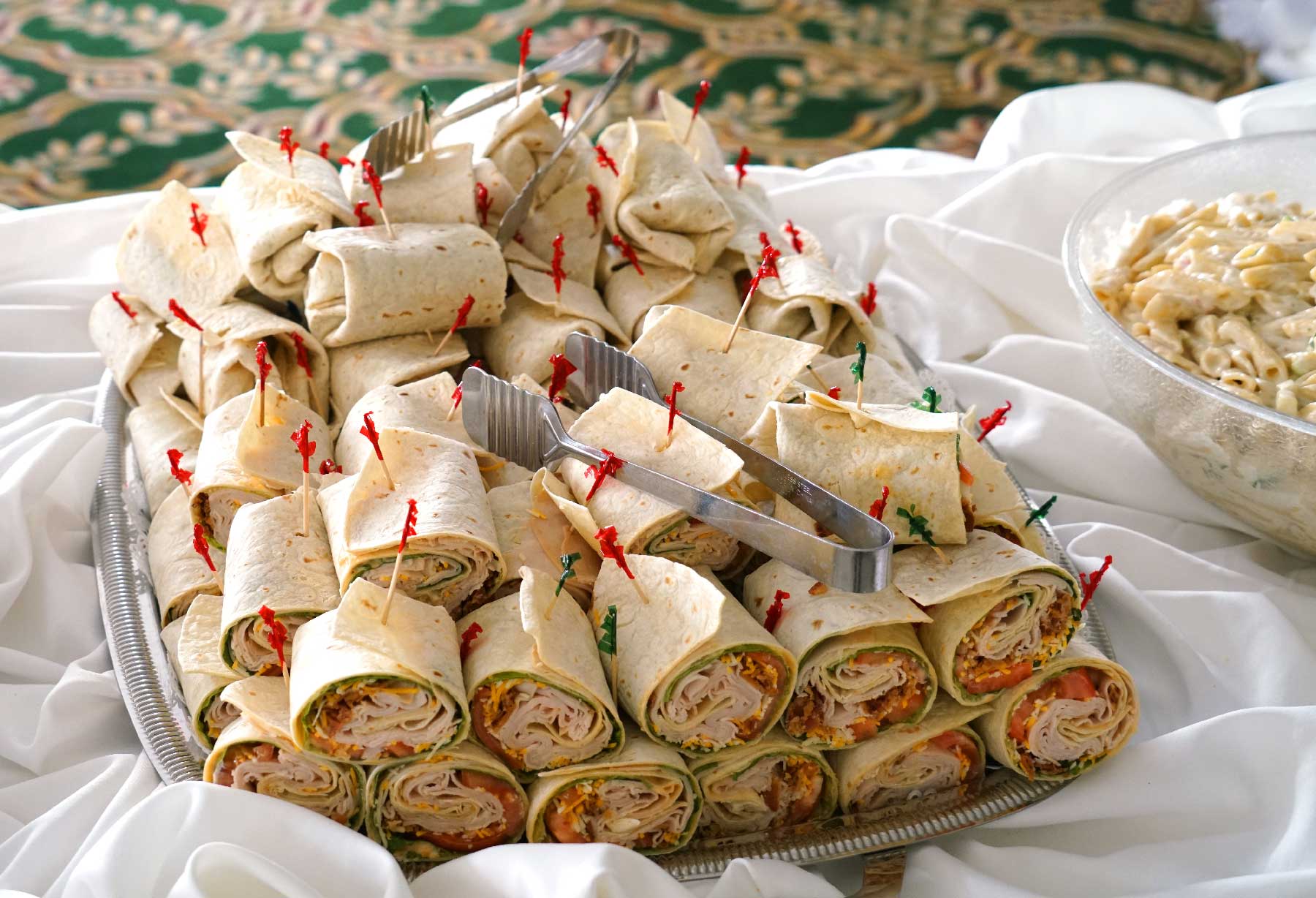
This matters even more for finger food and grazing-style catering, because it’s meant to be eaten while people are mingling, talking, and moving around the room. If it’s fiddly, messy, or awkward to eat standing up, it becomes a distraction rather than a conversation starter. Good finger food is the opposite, easy to pick up, easy to eat in a couple of bites, and good enough that people mention it later. It keeps people circulating and talking, rather than parked at a table working through a plated meal.
Businesses are investing more in this, not less
It isn’t just intuition telling businesses that food matters at events; spending patterns back it up. Corporate catering has become one of the fastest-growing parts of the catering industry, with businesses increasingly using food to bring people together, mark milestones, and make a strong impression on clients. According to industry data compiled by IMARC Group, over 53% of corporate buyers planned to increase their catering budgets in 2025, and 80% of companies were already placing catering orders at least once a month. (IMARC Group, Catering Services Market Report)
That kind of investment doesn’t happen by accident. Businesses have worked out that the food at an event isn’t a cost to minimise, it’s one of the more visible signals of who they are and how seriously they take the people in the room, whether that’s clients, staff, or partners.
What good corporate catering actually looks like
If food is doing this much work for your brand, it’s worth being deliberate about a few things:
Match the food to the occasion. A relaxed team celebration and a formal client pitch call for different spreads. Grazing boards and casual finger food suit informal, social events. Sharper, more polished canapés suit occasions where you’re trying to impress a client or make a strong first impression.
Think about how people will actually eat it. At most corporate events, people are standing, holding a drink, and talking. Food that needs cutlery, drips, or takes two hands to manage will get in the way of that. The best finger food options are the ones nobody has to think about eating.
Presentation counts as much as flavour. A share board that looks styled and intentional signals effort. A few sad trays of identical sandwiches signal the opposite, even if the sandwiches themselves are perfectly fine.
Consistency matters more than volume. Guests notice quality dips far more than they notice quantity. A smaller, well-executed spread almost always leaves a better impression than a large one where half the dishes have gone cold or dry.
Dietary needs are part of the impression, not an afterthought. Guests with dietary requirements remember whether they were catered for properly or left with the same three plain crackers everyone else got as an afterthought. Handling this well is part of showing guests they were actually considered, not just counted.
The bottom line
Food isn’t a side detail at a corporate event; it’s one of the clearest signals guests get about your business. It shapes first impressions, reinforces (or undercuts) how professional you appear, and it’s one of the few parts of an event people are guaranteed to remember well after the day is over.
Getting it right doesn’t mean overspending or overcomplicating the menu. It means choosing food that suits the room, the guests, and the message you’re trying to send, and trusting a caterer who understands that finger food done well is genuinely a form of hospitality, not just a formality. When the food is right, nobody talks about the catering. They talk about how good the event was, and that’s exactly the impression you want your brand to leave.
Delivery Sydney-Wide
We deliver delicious and affordable gourmet finger foods to areas right across Sydney, including: