
Anyone who has planned an event knows the moment: the RSVP list comes back, and alongside the “yes” and “no” replies is a growing column of notes. Gluten-free. Nut allergy. Vegan. Halal. Dairy-free. It used to mean a scramble, a separate tray here, a special plate there, a guest quietly pulled aside so the caterer can double-check what’s in the sauce. Done badly, it makes some guests feel like an afterthought at their own event.
Finger food catering solves this problem in a way that plated meals often can’t. When food is served as a shared spread of small, well-labelled bites, everyone eats from the same table. Nobody has to ask for the “special” plate, and nobody has to explain their allergy to a stranger holding a tray. That’s the real art of a dietary-friendly menu: not adding separate dishes on the side, but designing the whole spread so it already works for almost everyone.
Why this matters more than most hosts realise
The numbers on dietary needs are bigger than most people expect. In Australia, Allergy & Anaphylaxis Australia reports that food allergy affects around one in ten babies, one in twenty teenagers, and roughly one in fifty adults, with more than 170 foods known to trigger a reaction. That’s before you even count guests who are avoiding certain foods for religious, ethical, or lifestyle reasons rather than a medical one.
The trend is also moving in one direction. Research summarised by Murdoch Children’s Research Institute shows that hospital admissions for severe allergic reactions in Australia have climbed by more than 350% over the past two decades, and notes that Australia has some of the highest reported rates of childhood food allergy in the world. Put simply: at any event with more than a handful of guests, there’s a good chance someone in the room needs their food to be genuinely safe, not just roughly accommodated.
For a host, that’s not a reason to panic. It’s a reason to plan the menu properly from the start, rather than bolting on a “special” option once the guest list is finalised.
Design the menu around overlap, not exceptions
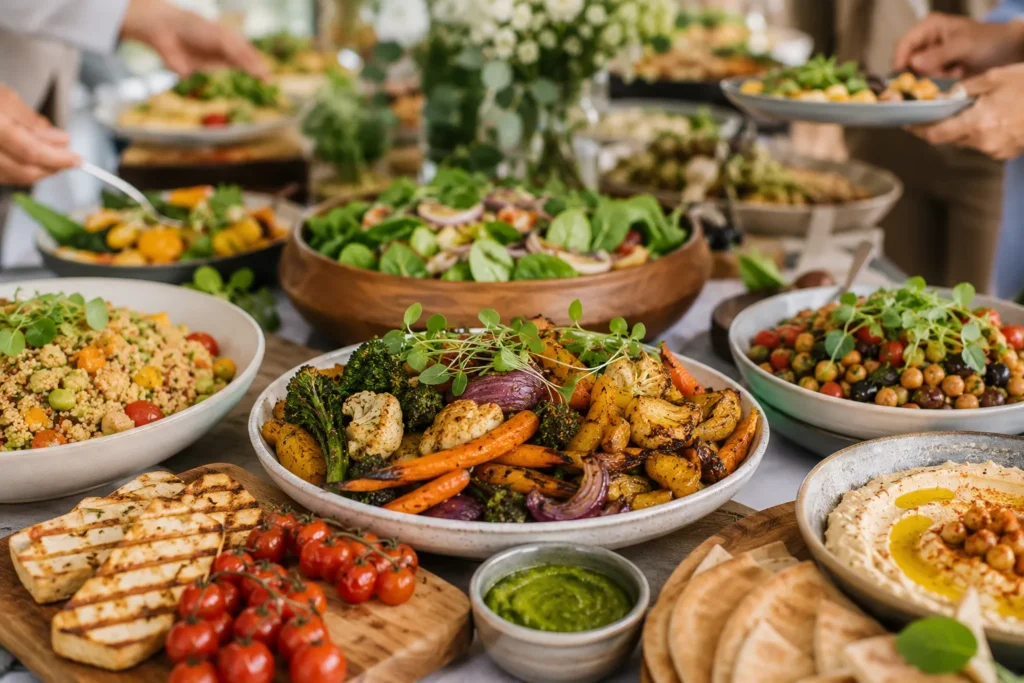
The easiest way to cater well for dietary needs is to build a menu where most dishes already sit inside more than one category. A grilled vegetable skewer can be vegan, gluten-free, and dairy-free all at once, without looking or tasting like a compromise. A rice paper roll made with fresh herbs, rice noodles, and prawns can be naturally free of gluten and dairy, and easily adapted to a vegetarian version using the same wrapping technique.
This is the opposite of the old approach, where the “normal” menu was set first and a token gluten-free or vegan tray was added afterwards, usually looking noticeably different from everything else on the table. When dietary-friendly dishes are designed in from the beginning, they blend in. Guests reach for what looks good to them, not what’s been set aside for their category.
Labelling is part of the design, not an afterthought
Even the best-planned menu needs clear labelling, because guests shouldn’t have to guess or ask. Small cards near each dish, noting the key allergens and any dietary tags (vegetarian, vegan, gluten-free, dairy-free, nut-free), let people make their own choices with confidence. This matters for a simple reason: for someone with a serious allergy, an event is often a poor substitute for a restaurant, where they can ask questions directly or leave if something feels wrong. At a wedding, work function, or family celebration, that option isn’t really there, so clear labelling does the reassurance work instead.
Colour-coded flags or simple icons work well for finger food specifically, because guests are moving past a table and making quick decisions rather than sitting with a menu in hand.
Keep cross-contamination in mind, not just ingredients
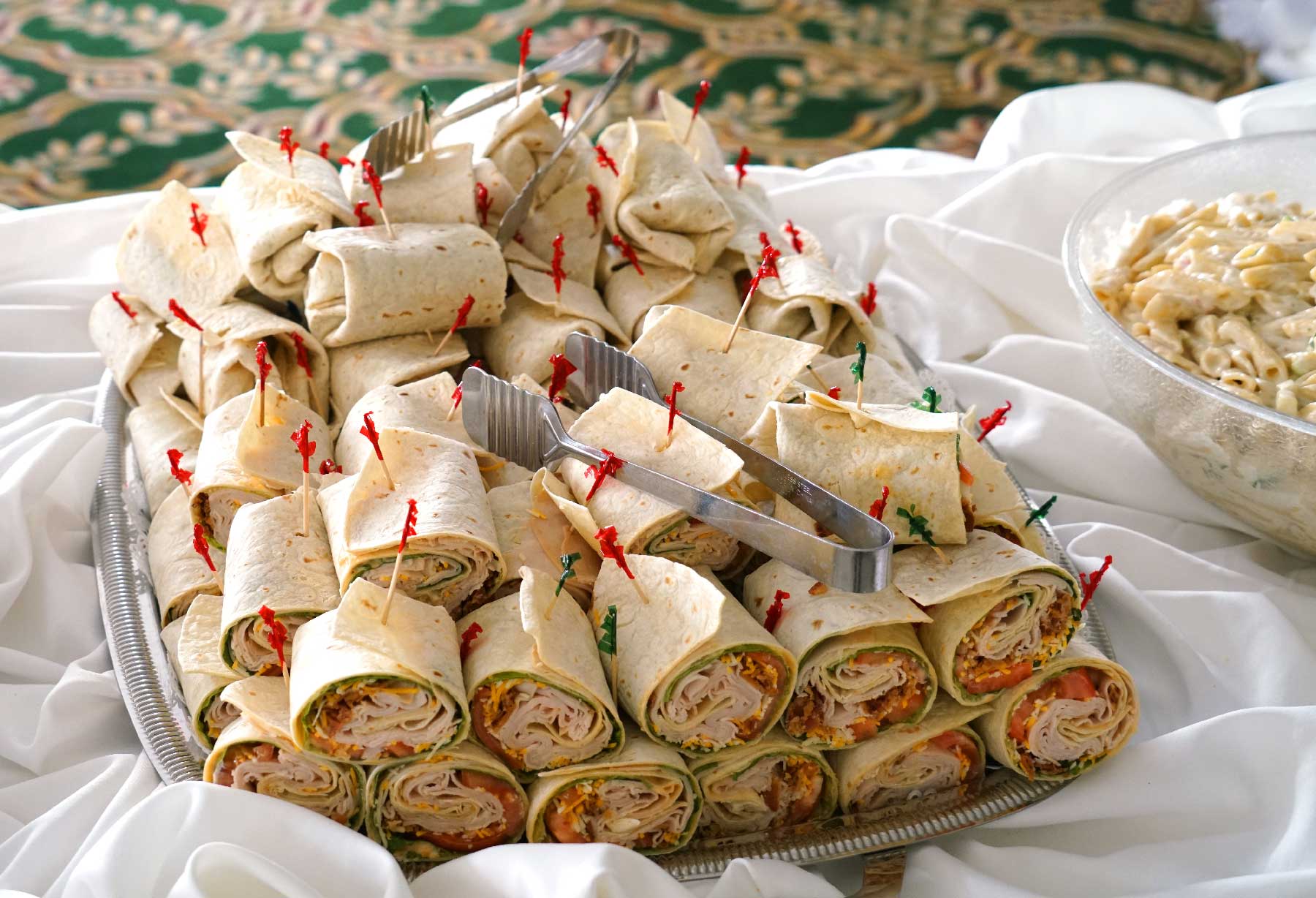
A dish can be free of a particular allergen on paper and still carry a real risk if it’s prepared on the same board as something else, or served with a shared set of tongs. For guests with serious allergies, this detail matters as much as the recipe itself. Separating gluten-free items on their own platter, using dedicated utensils, and briefing serving staff on which trays need extra care are small steps that make a big difference to how safe, and how welcome, those guests feel.
One spread, many needs
The real win of this approach is that it removes the awkwardness that used to come with dietary requirements. Nobody at a well-designed finger food event needs to flag down a staff member, explain a medical condition to a room full of strangers, or eat from a visibly different plate. The vegan guest, the guest with coeliac disease, and the guest with no restrictions at all can stand at the same table and choose from the same spread.
This is also good business sense, not just good manners. With such a large share of guests at any sizeable event carrying at least one dietary need, a caterer who handles this well isn’t managing an edge case, they’re handling one of the most common parts of the job. Getting it right, quietly and without fuss, tends to be exactly what turns a happy guest into a returning client.
What to ask your caterer before your next event
If you’re weighing up finger food catering for an upcoming event, a few questions are worth asking upfront: How many of your standard dishes are naturally free of common allergens? How do you label dishes on the day? What’s your process for avoiding cross-contamination between trays? A caterer who can answer these clearly, without treating them as unusual requests, is one who has already built dietary thinking into their everyday menu, which is exactly what makes a shared table work for every guest in the room.
Delivery Sydney-Wide
We deliver delicious and affordable gourmet finger foods to areas right across Sydney, including: