
Setting a catering budget can feel like guesswork. You want your guests well fed and happy, but you also don’t want to blow the whole event budget on food alone. The good news is that with a bit of planning, you can land on a number that’s realistic and still leaves room for a menu people will remember.
Start With What’s Typical, Then Adjust
Catering costs in Australia vary a lot depending on the type of event and the style of service. As a general guide, casual catering such as platters or BBQ-style food tends to sit at the lower end of the scale, while sit-down meals with full table service sit at the top. Catering services across Australia typically range from $10 to $150 per person, depending on the menu, service style, and location.
Finger food sits comfortably in the more affordable middle ground. Cocktail-style catering, which covers finger food, canapés, and small plates that guests can enjoy while mingling, generally runs between $60 and $100 per guest in Australia. That’s a useful starting figure if you’re trying to work out a rough total for your guest list before you start getting quotes.
It’s also worth knowing that location plays a role. Catering in major cities such as Sydney and Melbourne tends to cost more than in regional areas, largely due to demand and higher local running costs for caterers. If you’re catering an event in a regional area, you might also need to factor in travel charges, since some caterers add a fee for delivery outside their usual service zone.
Work Out Your Real Number of Mouths to Feed
This sounds obvious, but it’s the step most people get wrong. A rough guest list isn’t good enough. You need a firm headcount, because catering is almost always priced per person, and every guest you add or remove shifts your total.
A helpful trick is to build in a small buffer, around five to ten per cent more food than your exact guest count, rather than ordering to the number on the RSVP list. People bring unexpected plus-ones, and some dishes (especially popular ones) run out faster than others. A good caterer will help you work out the right buffer for your event type, so ask them directly rather than guessing.
Pick the Right Format for Your Budget
The format you choose has one of the biggest effects on your final cost. Finger food and grazing-style catering use fewer staff than a plated dinner, since there’s no table service involved, and that saving gets passed on to you.
If you’re comparing formats, here’s roughly how they stack up:
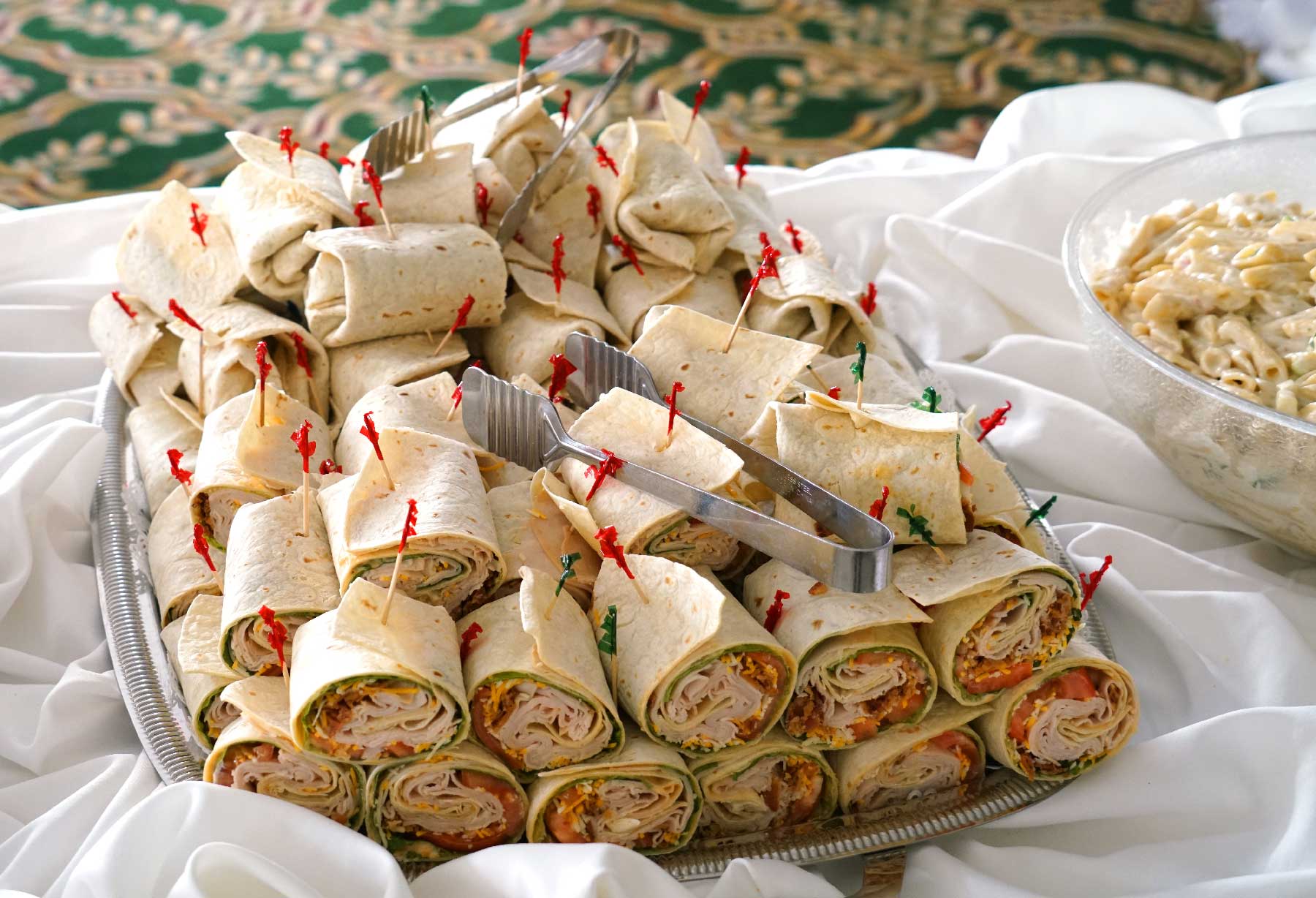
- Sandwich and cold platters sit at the cheapest end, though they can feel less impressive for a special event.
- Finger food and canapés offer a good middle ground, with a wide variety of hot and cold options for guests to graze on throughout the event.
- Grazing tables work well for cocktail-style gatherings and tend to be priced a little higher due to the presentation and range of produce involved.
- Hot buffets generally cost more again, since they require chafing dishes and ongoing replenishment.
Choosing finger food over a plated meal is one of the simplest ways to stretch a budget further without guests feeling like they’ve missed out, because the variety of dishes on offer often makes up for the more casual format.
Don’t Let Hidden Costs Catch You Out
A quoted per-person price doesn’t always tell the whole story. Some of the costs that catch people off guard include delivery or travel fees, hire of platters, plates, napkins or serving equipment, staff for setup and pack-down if you’ve chosen a more elaborate spread, and extra charges for dietary requirements like gluten-free, vegan or nut-free options.
Before you commit to a caterer, ask for a full breakdown rather than just the per-head figure. A transparent caterer will be upfront about what’s included and what’s optional, which makes comparing quotes far easier.
Where You Can Save Without Sacrificing Quality
Cutting corners on food quality is rarely the answer if you want a successful event, but there are smarter ways to manage cost.
One option is to simplify your menu rather than shrink your budget. Offering a slightly smaller selection of well-made dishes is almost always a better outcome than spreading the same budget thinly across too many options. A focused menu also tends to be easier for caterers to execute well, since they’re not juggling dozens of different items at once.
Choosing seasonal ingredients is another practical lever. Produce that’s in season is generally fresher and more affordable, and a good caterer will be able to build a menu around what’s currently available without you having to ask.
Finally, consider the time of day and length of your event. A two-hour afternoon gathering needs a lighter spread than an all-evening event, so matching your order to the actual time guests will be eating helps avoid paying for food that goes uneaten.
Get Quotes Early and Compare Properly
Because pricing varies so much between caterers, it pays to get at least two or three quotes before settling on one. When comparing, look beyond the bottom-line number. Check what’s included, ask about minimum spends, and find out whether dietary requirements come at an extra cost.
Being upfront with your caterer about your budget from the start also helps. Most caterers would rather build a menu that fits comfortably within what you’ve got to spend than have you stretch beyond it, so a clear conversation early on tends to lead to a better result for everyone.
The Bottom Line
A good catering budget isn’t about finding the cheapest option. It’s about understanding what drives the cost, choosing a format that suits your event, and being clear with your caterer about what matters most to you. Get those three things right, and you’ll end up with a spread your guests remember for the right reasons, without blowing your budget to get there.
Delivery Sydney-Wide
We deliver delicious and affordable gourmet finger foods to areas right across Sydney, including: