

Picture a typical networking event. You walk in, grab a name tag, and immediately face a small but real problem: you’ve got a drink in one hand, a bag on your shoulder, and nowhere obvious to put a plate. So you either skip the food and stand there hungry, or you balance everything precariously while trying to shake someone’s hand. Neither option feels easy, and neither helps you actually connect with anyone.
This isn’t a minor inconvenience. It’s one of the biggest reasons networking events feel awkward in the first place, and it’s almost entirely a design problem, not a people problem. As one event planning guide puts it, attendees are often weighed down by bags, holding a drink, and left with only one free hand, while organisers rarely think through how guests are meant to eat, drink, and network at the same time (Cvent). Fix the food format, and a surprising amount of that awkwardness disappears on its own.
Why the Food Format Matters More Than the Food Itself
It’s tempting to think great networking comes down to a good guest list or a well-run agenda. But the physical experience of eating shapes how relaxed people feel, and how freely they move around the room. Plated, sit-down meals are formal and structured, which suits some events, but they also anchor people to one table for the whole meal, meaning you might spend an hour next to the same two or three people and never meet anyone else in the room.
Buffets and food stations work differently. Because guests have to get up and walk to find what they want, they naturally cross paths with people they wouldn’t otherwise meet. Research on event catering backs this up, noting that buffets create natural opportunities for mingling as guests move between food stations and seating areas (Blair County Convention Center). Even something as simple as spacing out food stations rather than clustering everything in one spot can pull people out of the cliques they arrived with and into new conversations.
The Case for Finger Food
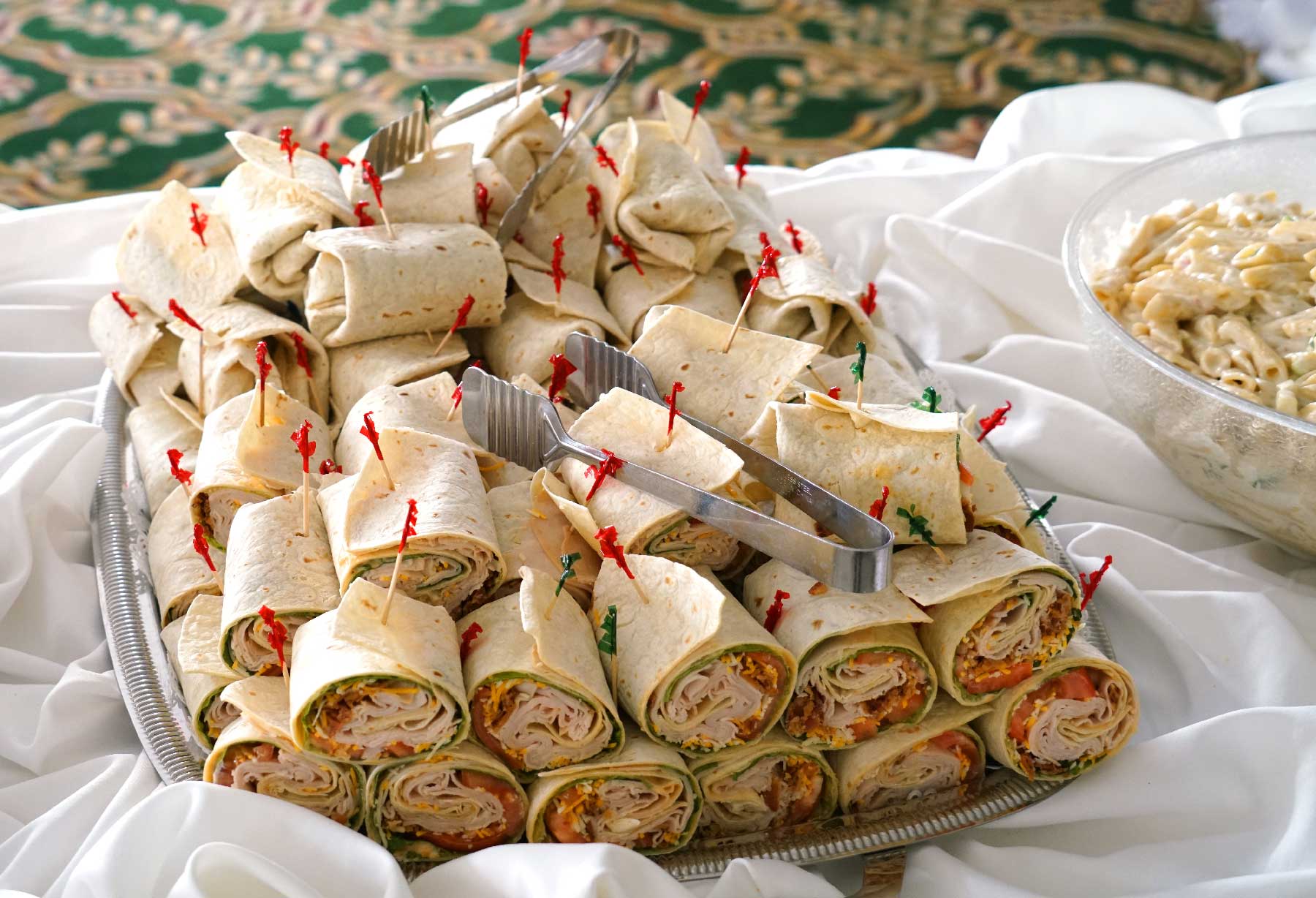
If buffets get people moving, finger food takes it a step further by solving the “one hand problem” completely. When food comes in small, self-contained bites, guests don’t need a knife, fork, table, or a place to set anything down. They can hold a canapé and a drink, shake a hand, and keep talking, all without breaking stride.
Catering experts who specialise in networking events consistently point to this idea: food that requires minimal attention to eat lets guests focus on the conversation instead of the plate. Bite-sized appetisers, mini sandwiches, and canapés that can be eaten in one or two bites are recommended specifically because they reduce the physical distraction of eating (Luxe Cruises and Events). The food becomes something that supports the conversation rather than competing with it.
There’s a wider psychological piece here too. Eating together is one of the oldest and most reliable ways humans build social bonds, researchers sometimes call this “commensality.” Shared meals can lower social barriers in ways that structured networking sessions often can’t, creating a more relaxed environment where hierarchy matters less and genuine connection becomes easier (Blair County Convention Center). Finger food, served informally around the room, taps directly into that effect.
Food as a Conversation Starter, Not Just Fuel
There’s also a simple, practical benefit: food gives people something to talk about when they don’t know what else to say. Standing next to someone you’ve never met, “what is this?” is a far easier opener than “so, what do you do?” Unusual or interesting bites can do a lot of quiet work here. Some caterers deliberately build small twists into familiar items, like a classic canapé with an unexpected flavour, precisely because it gives guests something to comment on and a natural way into a conversation (Kahn’s Catering).
This matters more than it might seem, especially for guests who find networking events draining. Data from Eventbrite’s research on event attendees found that while 60% of self-described extroverts wanted to see more networking events, only 42% of introverts felt the same way (Eventbrite). A good food format can help close that gap. Casual, grazing-style catering takes the pressure off; there’s no obligation to “work the room” in a formal sense, because moving toward the next food station is a perfectly natural reason to end one conversation and start another.
Practical, Not Precious
None of this means your event needs to be elaborate. In fact, the opposite is usually true. Standing receptions with grab-and-go style menus tend to work better for networking than traditional plated meals, largely because they give guests more freedom over what they eat and who they end up talking to (Skift Meetings). They also tend to be easier on organisers, since flexible, station-based menus can accommodate a wider range of dietary needs without singling anyone out.
If you’re planning your next event, a few simple choices go a long way:
- Choose food that fits in one hand. If a guest needs both hands or a table to eat something, it’s competing with the conversation, not supporting it.
- Spread the food out. A few smaller stations around the room encourage more movement than one central table.
- Pick a couple of interesting items. A slightly unexpected flavour or presentation gives people something easy to talk about.
- Keep it casual. Grazing-style service takes the pressure off both introverts and hosts, and lets people network at their own pace.
At the end of the day, people don’t remember networking events for the itinerary. They remember whether they felt comfortable, whether they had a good conversation, and whether the whole thing felt like effort or like ease. Food is one of the simplest, most controllable levers you have to shape that outcome. Get the format right, and the mingling tends to take care of itself.
Delivery Sydney-Wide
We deliver delicious and affordable gourmet finger foods to areas right across Sydney, including: