
Planning the menu for an event usually comes down to a few big decisions: how much food, what kind of food, and how it’s going to be served. But there’s a quieter decision sitting underneath all of that, one that a lot of hosts don’t think about until the day itself: how do you actually balance hot and cold finger food so that everything arrives on time, tastes the way it should, and stays safe to eat for the length of the event?
It’s a more practical question than it sounds, and getting it right makes a bigger difference to how an event runs than most people expect.
Why the mix matters more than the menu
Finger food is popular precisely because it removes the friction of a sit-down meal. Guests can eat while standing, talking, and moving between conversations, which is exactly what most events need. But that same freedom creates a challenge behind the scenes. Unlike a plated meal that goes from kitchen to table in minutes, finger food is often out on display for hours at a time, sometimes across an entire cocktail function or long lunch.
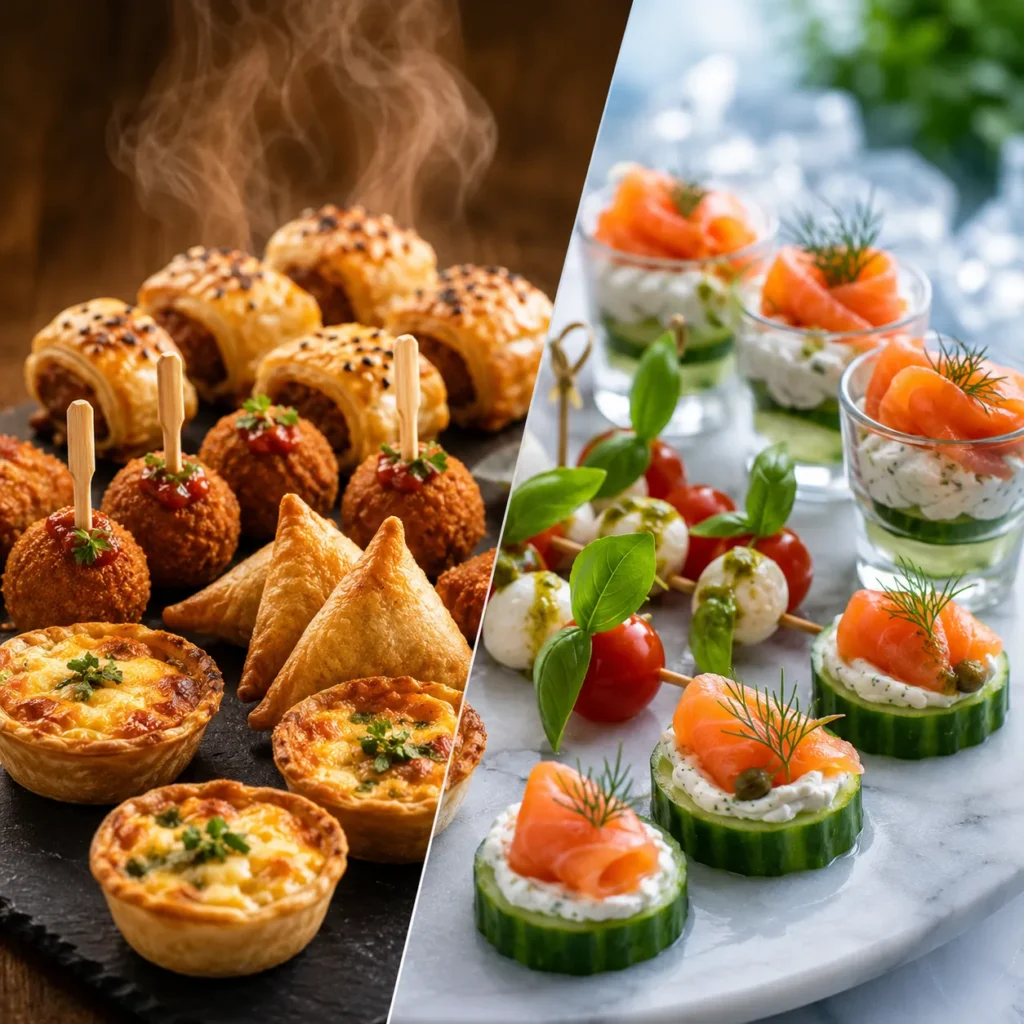
That’s where the hot and cold balance comes in. Cold items like canapés, cured meats, and fresh tartlets can sit out a little longer without much fuss, as long as they’re kept properly chilled beforehand. Hot items like arancini, sliders, or mini quiches need more active management, because heat doesn’t hold the same way once food leaves an oven or a warming tray. A menu that leans too heavily on hot food creates constant pressure on timing. A menu that’s all cold can feel flat, especially for an evening event where guests expect something warm and comforting later on. The best events tend to land somewhere in the middle, with enough variety that no single dish has to carry the whole event.
The food safety side of the equation
This is where the balance stops being just a matter of taste and starts being a matter of safety. Food Standards Australia New Zealand, the body that sets national food safety rules, explains that potentially hazardous food needs to stay out of what’s known as the temperature danger zone, the range where bacteria multiply fastest. Their guidance states that the rule has been scientifically checked and is based on how quickly microorganisms grow in food at temperatures between 5°C and 60°C, and that this time is cumulative. In other words, it adds up across the whole time the food has been out of the fridge, including preparation, storing, transport and display.
This is exactly why the hot and cold split matters at a catered event. A platter of cold canapés that’s been sitting out since guests arrived, a warming tray of arancini that’s cooled down without anyone noticing, and food that’s been in transit for an hour before the event even started- all of that time counts toward the same clock. Good catering isn’t just about flavour combinations. It’s about designing a menu and a service plan that respects how long food can safely sit out, and building in the right equipment, timing, and staff attention to make sure it never gets close to that limit. You can read the full guidance on the Food Standards Australia New Zealand website.
This isn’t a small or theoretical concern either. National estimates put the annual cost of foodborne illness in Australia at AUD 2.44 billion each year, with the largest component of this cost due to lost productivity, followed by premature mortality and direct costs including hospitalisations. Events with large numbers of guests and food sitting out for extended periods are exactly the kind of setting where small lapses in temperature control can have outsized consequences. A caterer who plans the hot and cold balance properly isn’t just protecting flavour; they’re protecting everyone at the event.
What this looks like in practice
For a host booking finger food catering, the good news is that most of this planning sits with the caterer, not with you. But it helps to know what a well-run service looks like so you can ask the right questions. A caterer managing the balance well will usually:
- Serve hot items in smaller, more frequent batches rather than one enormous tray that sits out for the whole event
- Use proper hot-holding equipment, like chafing dishes or warming units, rather than relying on food staying warm on its own
- Keep cold items refrigerated until close to serving time, rather than laying everything out at once at the start
- Plan the run sheet so that hot food is cooked and served in cycles that match the pace of the event, not all at once at the beginning
This kind of planning also affects how an event feels, not just how safe it is. Guests notice when hot food arrives fresh throughout the evening rather than sitting out and going lukewarm. They also notice when cold items still taste crisp and fresh two hours in, rather than slightly warm and soft. Getting the balance right isn’t just about compliance; it’s what separates food that feels considered from food that feels like it was put out once and left to fend for itself.
Choosing the right mix for your event
The right hot-to-cold ratio depends a lot on the type of event. A short cocktail hour before a dinner might lean cold, since guests are only grazing for thirty or forty minutes before moving on. A longer standing reception, especially in the evening, usually benefits from a stronger hot food presence, served in rounds rather than all at once. Outdoor events in warmer weather need extra care regardless of the mix, since higher ambient temperatures shrink the safe window for both hot and cold items.
If you’re not sure what balance suits your event, it’s worth asking your caterer directly how they plan to manage timing and temperature across the service. A caterer who can answer that clearly, rather than just talking about the menu itself, is usually the one who’s thought it through properly.
The bottom line
Hot and cold finger food each bring something different to an event, and neither works well as the whole story on its own. The balance between them isn’t just a matter of taste or variety; it’s a matter of food safety, guest experience, and the practical realities of keeping food at the right temperature for however long your event runs. Get that balance right, and guests get to enjoy the part that matters most: good food, served well, for the whole event rather than just the first twenty minutes.
Delivery Sydney-Wide
We deliver delicious and affordable gourmet finger foods to areas right across Sydney, including: